
Glaucoma is one of the leading causes of irreversible blindness worldwide. Because the most common form develops quietly without pain, redness, or early visual symptoms, up to 50% of individuals with glaucoma are unaware they have it until significant peripheral vision has been permanently lost.
In This Article
- What is Glaucoma and How Does It Damage Vision?
- The Main Forms of Glaucoma
- Normal Vision
- Moderate Glaucoma
- Advanced Glaucoma
- High-Risk Factors: Are You at Risk?
- Comprehensive Diagnostic & Treatment Options
- Expert Glaucoma Care at Infinite Vision Care
Understanding your risk profile and scheduling regular comprehensive screenings with an experienced Ophthalmologist in Mira Road or an Ophthalmologist in Kandivali is essential for preserving your vision over a lifetime.
What is Glaucoma and How Does It Damage Vision?
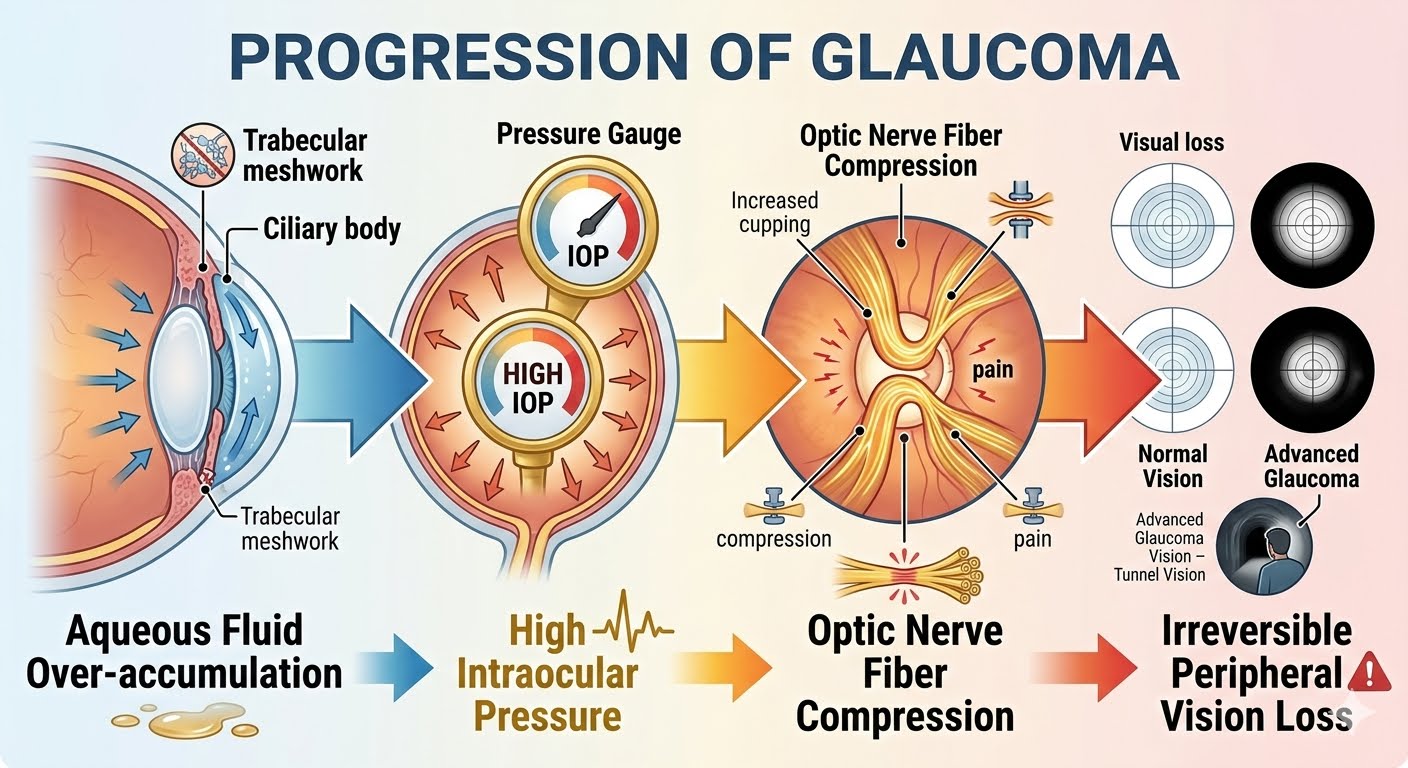
Inside the front of the eye, a clear fluid called aqueous humor is continually produced and drained through a microscopic meshwork (the trabecular meshwork). When this drainage system becomes partially blocked or inefficient, fluid accumulates, elevating Intraocular Pressure (IOP).
Over time, elevated pressure pinches and damages the delicate nerve fibers of the optic nerve—the cable carrying visual signals from the eye to the brain.
The Main Forms of Glaucoma
- Primary Open-Angle Glaucoma (POAG): The drainage angle remains anatomically open, but the microscopic meshwork slowly becomes resistant to fluid outflow over months and years. Vision loss is gradual and completely painless.
- Angle-Closure Glaucoma (PACG): The iris bulges forward, physically narrowing or completely blocking the drainage angle. Acute angle closure is a medical emergency causing severe eye ache, headache, nausea, colored halos around lights, and sudden blurred vision.
- Normal-Tension Glaucoma (NTG): Optic nerve damage and field loss occur even though measured eye pressure remains within the statistically “normal” range (10–21 mmHg), often due to vascular dysregulation or a fragile optic nerve head.
Normal Vision |
Moderate Glaucoma |
Advanced Glaucoma |
|
• Full, clear field of view stretching to all margins. |
• Subtle tunnel vision starting to form. |
• Severe tunnel vision restricting sight to a narrow central window. |
High-Risk Factors: Are You at Risk?
You should schedule a proactive screening at an eye clinic in Mira Road if you:
- Are over the age of 40
- Have a family history of glaucoma (parents or siblings)
- Have systemic health conditions such as diabetes, hypertension, or cardiovascular disease
- Have high myopia (severe nearsightedness)
- Have used topical, oral, or inhaled steroid medications for extended periods
- Have a history of past eye trauma or injury
Comprehensive Diagnostic & Treatment Options
Glaucoma management requires precise diagnostic testing:
- Medical Therapy (Eye Drops): Prostaglandin analogues, beta-blockers, and alpha-agonists reduce fluid production or improve drainage to lower intraocular pressure.
- Laser Peripheral Iridotomy (YAG PI): A painless, 5-minute laser procedure creating a microscopic bypass opening in the peripheral iris to prevent angle-closure attacks.
- Selective Laser Trabeculoplasty (SLT): Uses gentle laser energy to stimulate drainage tissue in open-angle glaucoma.
- Filtering Microsurgery (Trabeculectomy): Creates a tiny new drainage channel when medications and lasers are insufficient to control pressure.
Expert Glaucoma Care at Infinite Vision Care
Preserving your optic nerve requires careful, ongoing monitoring with an experienced clinical team:
- Expertise in Complex Cases: Led by Dr. Shaila Rajkumar Patel, Infinite Vision Care and Laser Centre provides comprehensive diagnostic evaluations for glaucoma, cataracts, and corneal diseases.
- Advanced Equipment: In-house tonometry, pachymetry, gonioscopy, and visual field testing ensure accurate early diagnosis.
- Personalized Care: Custom treatment plans designed to protect your sight and maintain your quality of life.
Protect your sight from the silent thief. Schedule an appointment with a dedicated eye doctor in Mira Road at Infinite Vision Care today.
Key Points
- Glaucoma is a leading cause of irreversible blindness, often developing without noticeable symptoms, making awareness and screening critical.
- Up to 50% of individuals with glaucoma may not realize they have it until significant peripheral vision loss occurs.
- Primary Open-Angle Glaucoma (POAG) is painless and involves gradual vision loss due to fluid drainage resistance, while Angle-Closure Glaucoma (PACG) can present as a medical emergency with acute symptoms.
- Normal-Tension Glaucoma (NTG) can cause optic nerve damage despite normal intraocular pressure, often linked to vascular issues.
- High-risk factors for glaucoma include being over 40, having a family history of the disease, certain health conditions, and prolonged use of steroids.
- Comprehensive diagnostic and treatment options for glaucoma include medical therapy, laser procedures, and microsurgery, emphasizing the importance of ongoing monitoring for effective eye care.